
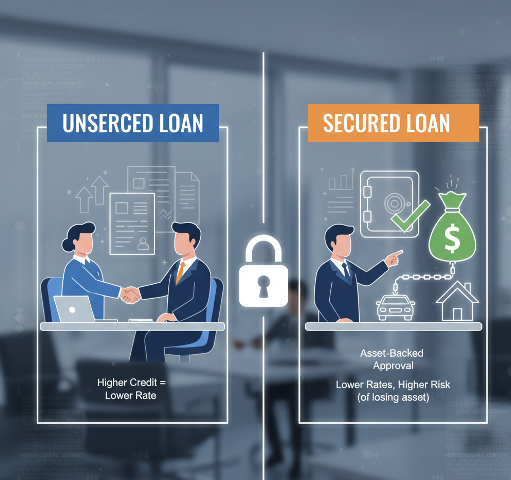
In the world of personal finance, the single most critical factor distinguishing one loan from another is whether it is secured or unsecured. This classification doesn’t just affect the interest rate; it fundamentally changes the risk profile for both the lender and the borrower. As a senior financial analyst, we must stress that understanding this difference is paramount before signing any loan agreement.
Defining the Core Difference: Collateral
The difference hinges entirely on the concept of collateral.
What is Collateral in Lending?
Collateral is a valuable asset that a borrower pledges to a lender to serve as a guarantee for the loan. The collateral provides the lender with security. Should the borrower fail to make payments (default), the lender has the legal right to seize and sell that asset to recover the outstanding debt.
The Fundamental Risk Split
- Secured Loans: The risk lies primarily with the borrower, who stands to lose their asset if they default.
- Unsecured Loans: The risk lies primarily with the lender, who has no asset to immediately recover their money.
Deep Dive: Unsecured Personal Loans (The Standard)
The unsecured personal loan is the most common form of this financing tool. It requires no collateral and is based entirely on the borrower’s promise to repay.
Risk Assessment and Eligibility
Since there is no asset to fall back on, the lender’s only protection is the borrower’s creditworthiness. Lenders scrutinize two factors above all others:
- Credit Score: A high score (typically FICO 670 and above for the best rates) indicates a reliable payment history.
- Debt-to-Income (DTI) Ratio: This ratio confirms the borrower’s financial capacity to handle the new monthly payment.
For this reason, unsecured personal loans are generally easier and faster to acquire, as the underwriting process involves less verification of physical assets.
Typical Rates and Terms
Because the lender takes on greater risk, unsecured personal loans typically carry higher interest rates than their secured counterparts. The rates offered are highly personalized, meaning a borrower with excellent credit could pay 7.99% APR, while a borrower with fair credit might pay 22.99% APR.
Deep Dive: Secured Personal Loans (The Alternative)
While less common among general consumer products, secured personal loans are a powerful tool when structured correctly.
Types of Acceptable Collateral
Lenders accept collateral that is easily appraised and liquidated, such as:
- Cash held in a savings account or Certificate of Deposit (CD).
- The title of a fully-owned vehicle (car, boat).
- Investment accounts.
The value of the collateral must typically equal or exceed the amount of the loan principal.
Why Rates are Lower
The presence of collateral significantly lowers the risk for the financial institution. This reduced risk translates directly into a benefit for the borrower: Secured loans often feature lower interest rates and may allow individuals with lower credit scores to qualify where they might otherwise be denied.
When to Consider a Secured Loan
A secured personal loan can be a strategic choice in a few key scenarios:
- Lower Credit Score: If your score is too low to secure a reasonable rate on an unsecured loan.
- Large Loan Amount: When borrowing a significant sum that a lender would be unwilling to offer without security.
Side-by-Side Comparison: The Key Decision Points
To make the best financial choice, a borrower must weigh the benefits against the risk of losing an asset.
| Feature | Unsecured Personal Loan | Secured Personal Loan |
| Collateral Required | No | Yes (Asset is pledged) |
| Interest Rate | Generally Higher | Generally Lower |
| Default Risk (Borrower) | Credit score damage; collection calls/suit | Risk of losing collateral (e.g., car repossession) |
| Credit Score Importance | Extremely High (Primary qualification factor) | Moderate (Collateral offers an offset) |
| Fund Access Speed | Typically faster | May be slightly slower (collateral valuation needed) |
| Flexibility of Use | High | High |
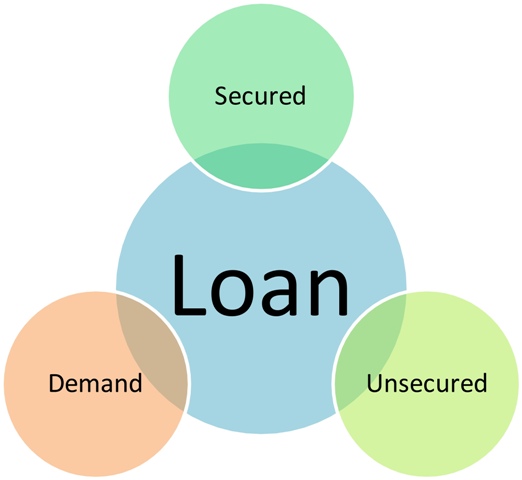
The Default Scenario: What Happens If You Can’t Repay?
This is the most critical difference for a borrower to understand:
- Default on an Unsecured Loan: If you stop making payments, the lender’s primary recourse is to report the default to credit bureaus (causing severe credit damage), send the account to collections, or file a lawsuit to obtain a judgment to garnish wages or levy bank accounts.
- Default on a Secured Loan: The lender’s first and fastest recourse is repossession or seizure of the collateral. They will sell the asset to cover the outstanding debt. Only after selling the collateral might they pursue the borrower for any remaining balance (known as a deficiency judgment).
In essence, a secured loan trades a lower cost of borrowing for the direct risk of losing a valuable asset.